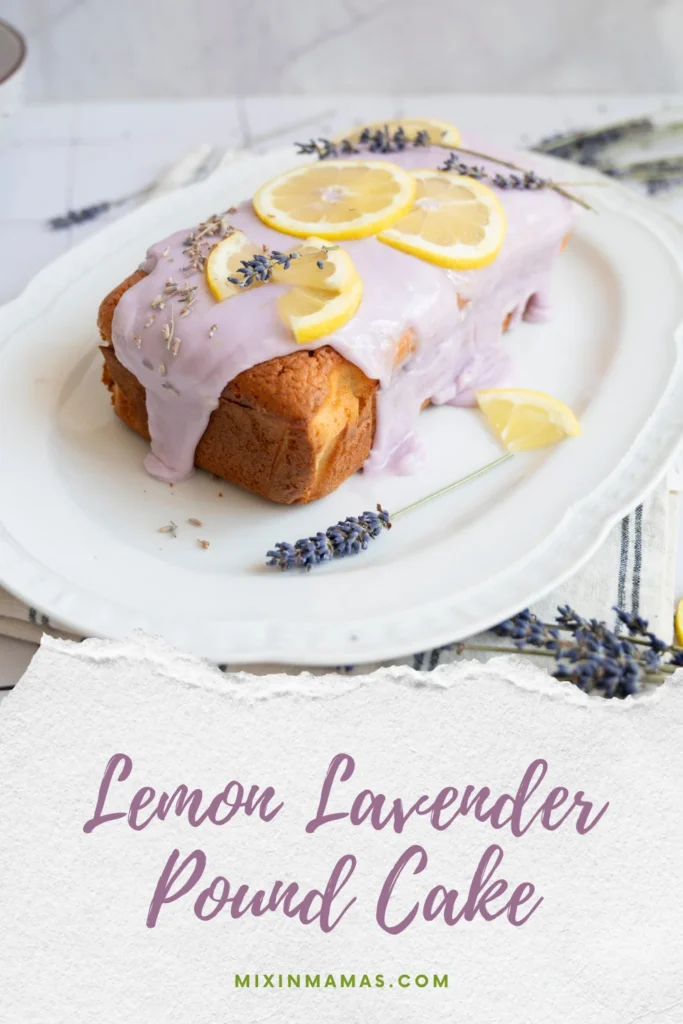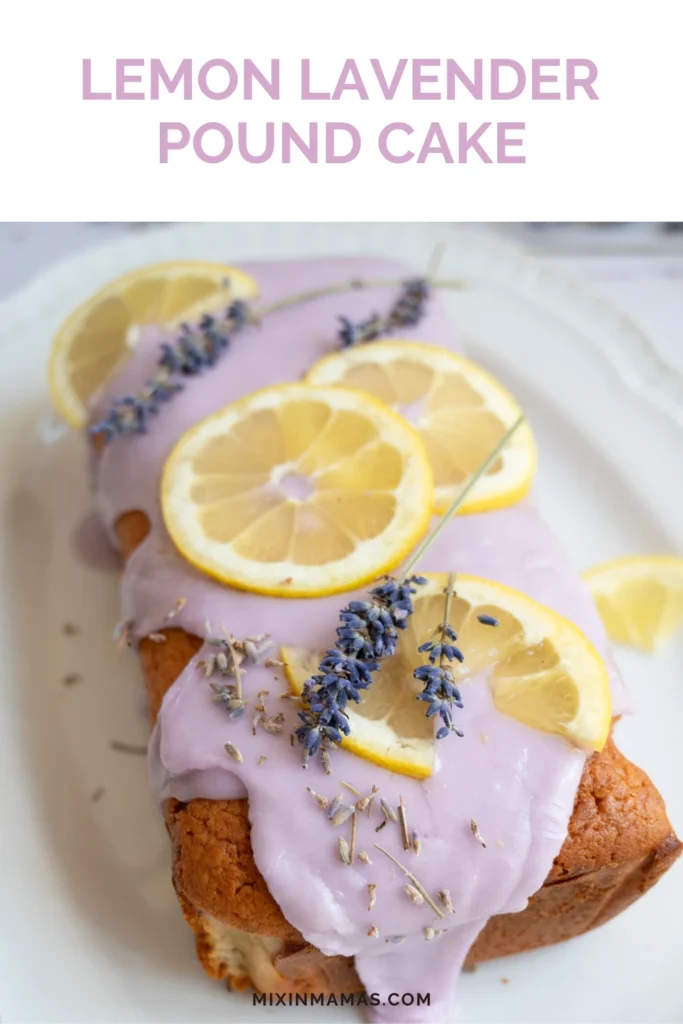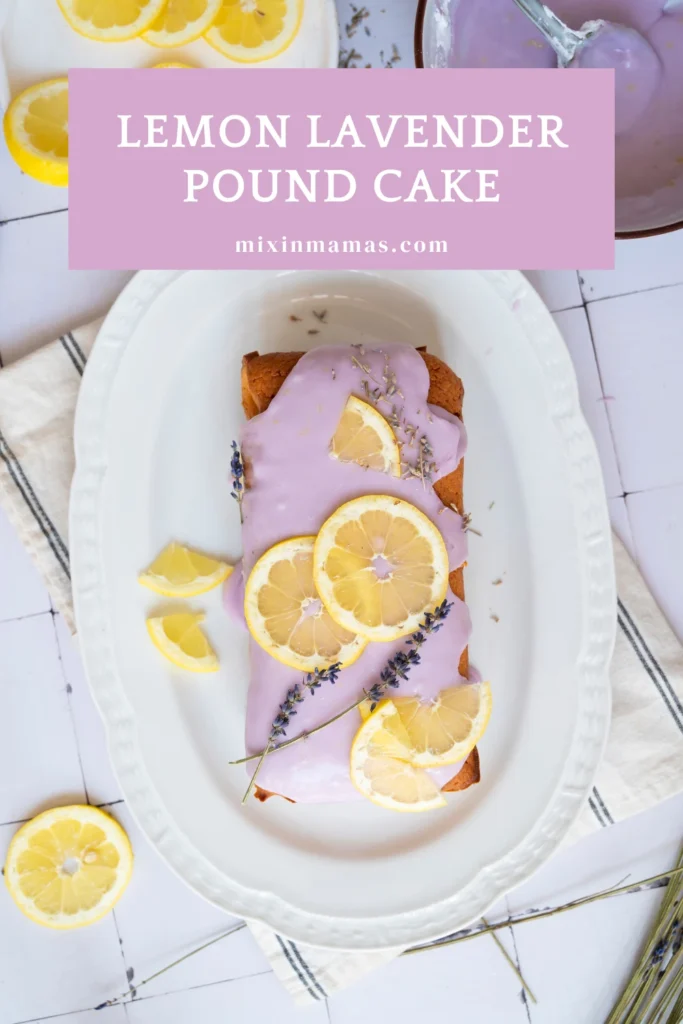
There’s something a little special about the combination of lemon and lavender. The bright citrus keeps the floral flavor from becoming too heavy, while lavender gives an otherwise classic loaf cake an unexpected twist.
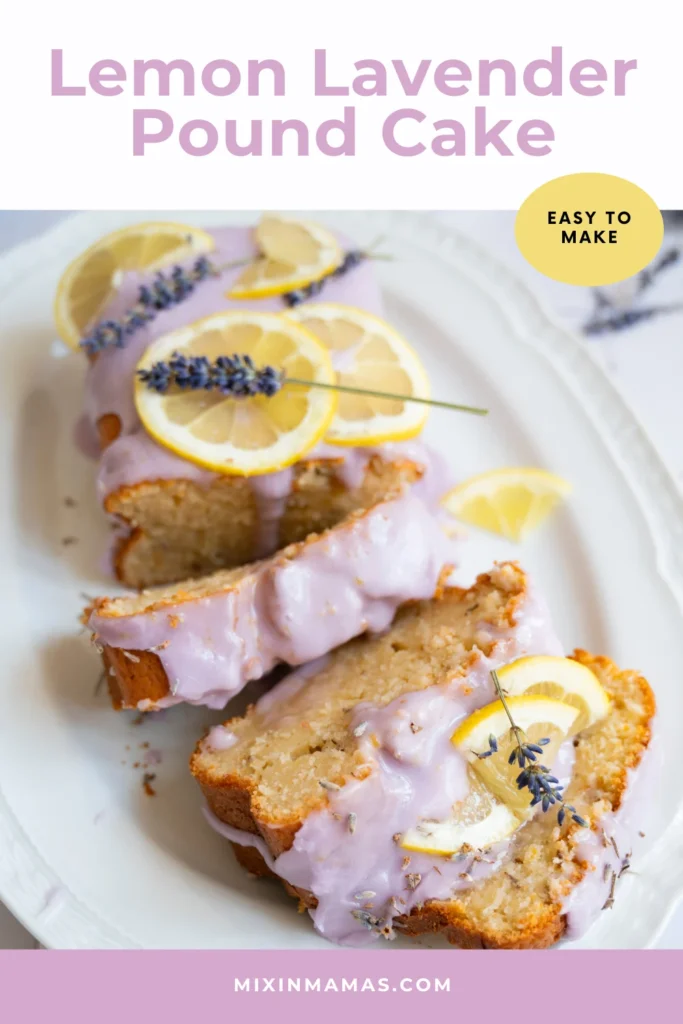
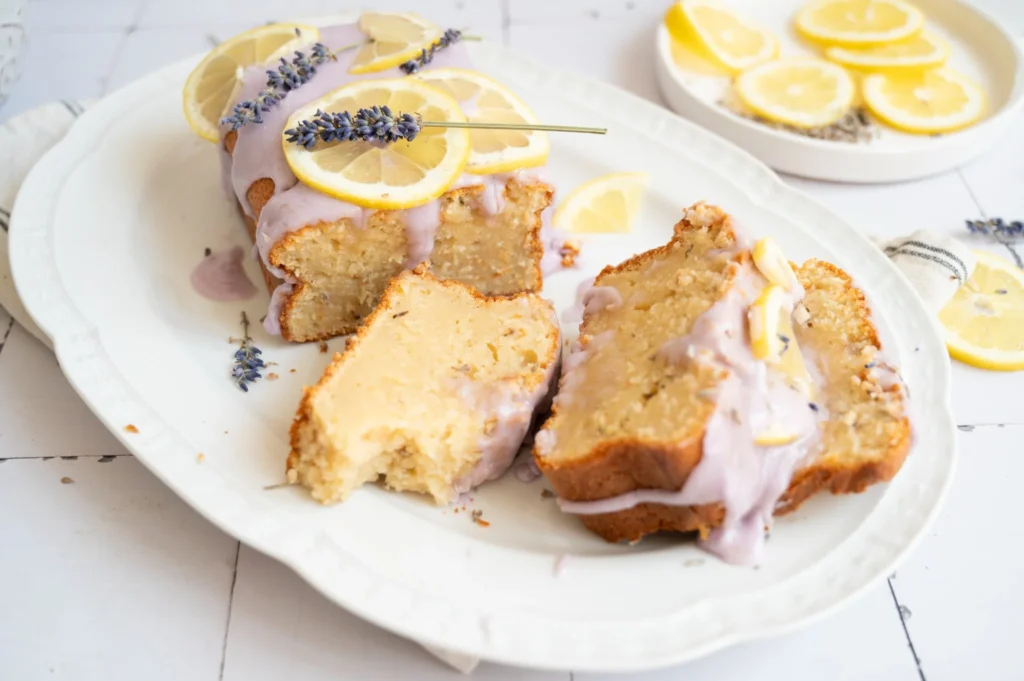
This Lemon Lavender Pound Cake is soft, moist, and fragrant, with fresh lemon in the cake and a sweet lavender-lemon glaze drizzled over the top. It’s pretty enough for a spring brunch, Mother’s Day, or an afternoon tea, but simple enough to make just because you feel like baking.
For a spring or summer gathering, serve slices with coffee or tea, or pair them with a pitcher of our refreshing Passion Tea Lemonade. You can even wrap up a loaf to give as a homemade gift.
If you love baking with lavender, be sure to try our Lavender Cookies with Icing too. They’re another lovely choice for spring gatherings, brunches, and afternoon tea.
Why You’ll Love This Lemon Lavender Pound Cake
- Bright and fragrant: Fresh lemon zest and juice balance the delicate floral notes of lavender.
- Soft and moist: Greek yogurt, butter, and olive oil help give the cake a tender texture.
- Beautiful without much fuss: A simple glaze and a little lemon zest make this loaf look special without complicated decorating.
- Perfect for entertaining: It’s a lovely addition to brunch, afternoon tea, showers, and spring gatherings.
- Easy to make ahead: Bake the cake a day before serving and glaze it once it has cooled completely.
Servings: 8–10
Prep Time: 20 minutes
Bake Time: 50–60 minutes
Cooling Time: About 1 hour 30 minutes
Total Time: About 2 hours 40 minutes
Ingredients
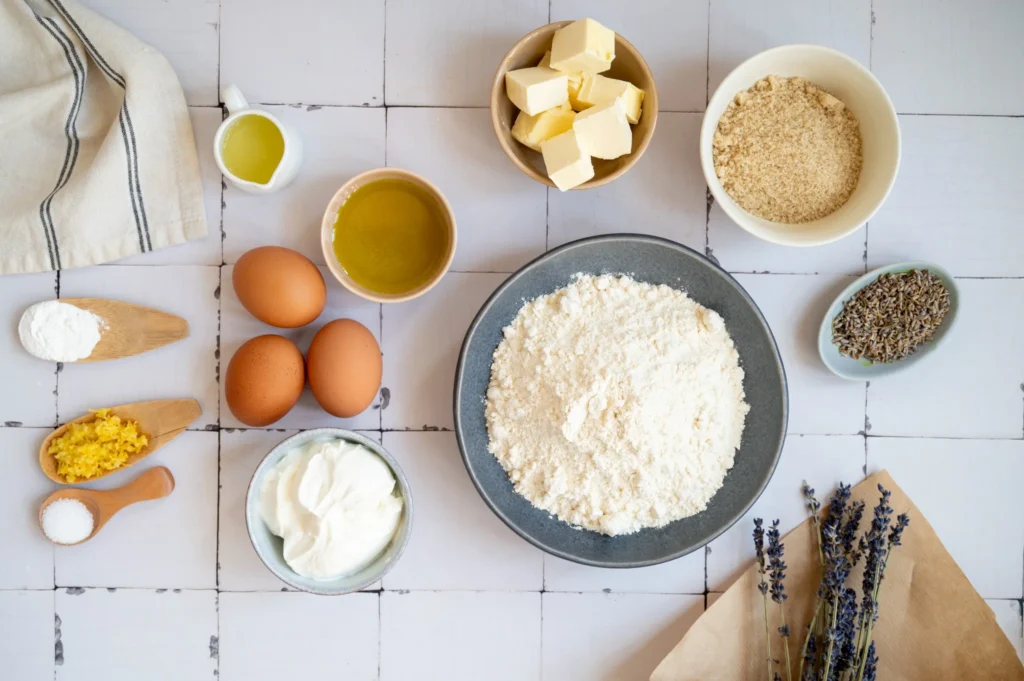
For the Cake
- 1 cup granulated sugar (200 g)
- 2 tablespoons finely grated lemon zest
- ½ cup unsalted butter, softened (115 g)
- ¼ cup extra-virgin olive oil (60 ml)
- 3 large eggs, room temperature
- 3 tablespoons fresh lemon juice (45 ml)
- 2 teaspoons dried culinary lavender buds, finely crushed
- 2 cups all-purpose flour (240 g)
- 1½ teaspoons baking powder
- ¼ teaspoon baking soda
- ½ teaspoon fine sea salt
- ½ cup plain Greek yogurt, room temperature (120 g)
For the Glaze
- 1½ cups powdered sugar, sifted (180 g)
- ¼ teaspoon lavender extract
- 1 teaspoon finely grated lemon zest
- 2–3 tablespoons fresh lemon juice or milk, plus more as needed
- Optional: 1–2 drops purple food coloring
- Optional: culinary lavender buds or thin strips of lemon zest for garnish
Instructions
Preheat and prepare the pan.
Preheat the oven to 350°F (175°C). Grease a 9 x 5-inch loaf pan and line it with parchment paper, leaving some overhang along the sides to make the cake easier to lift from the pan.
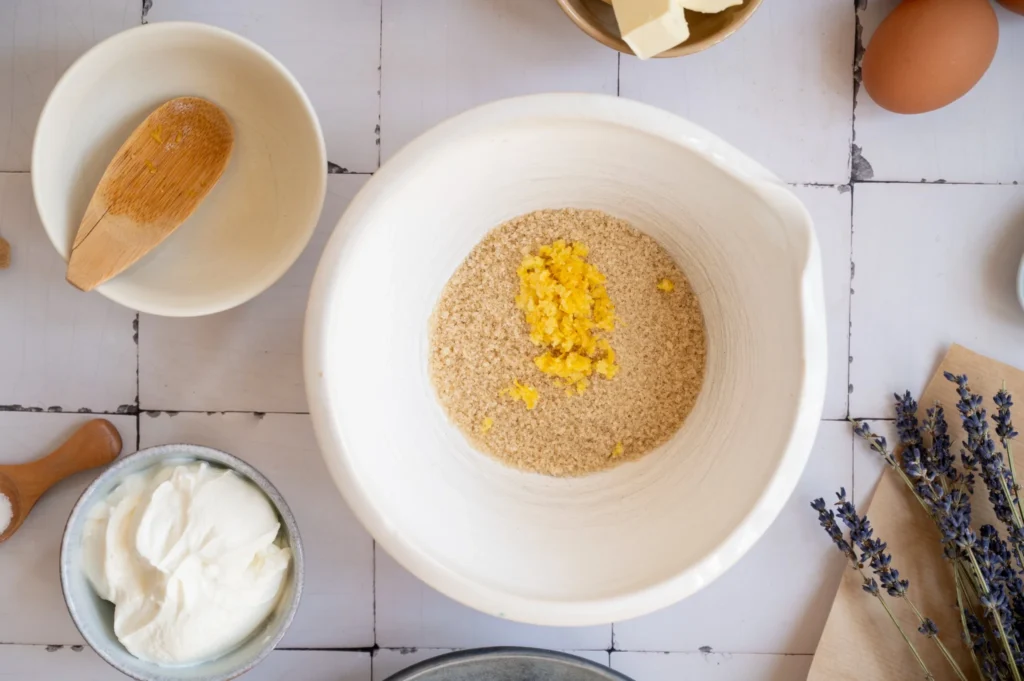
Make the lemon sugar.
Place the granulated sugar and lemon zest in a large mixing bowl. Rub them together with your fingertips for about 30 seconds, until the sugar is fragrant and slightly damp from the oils in the zest.
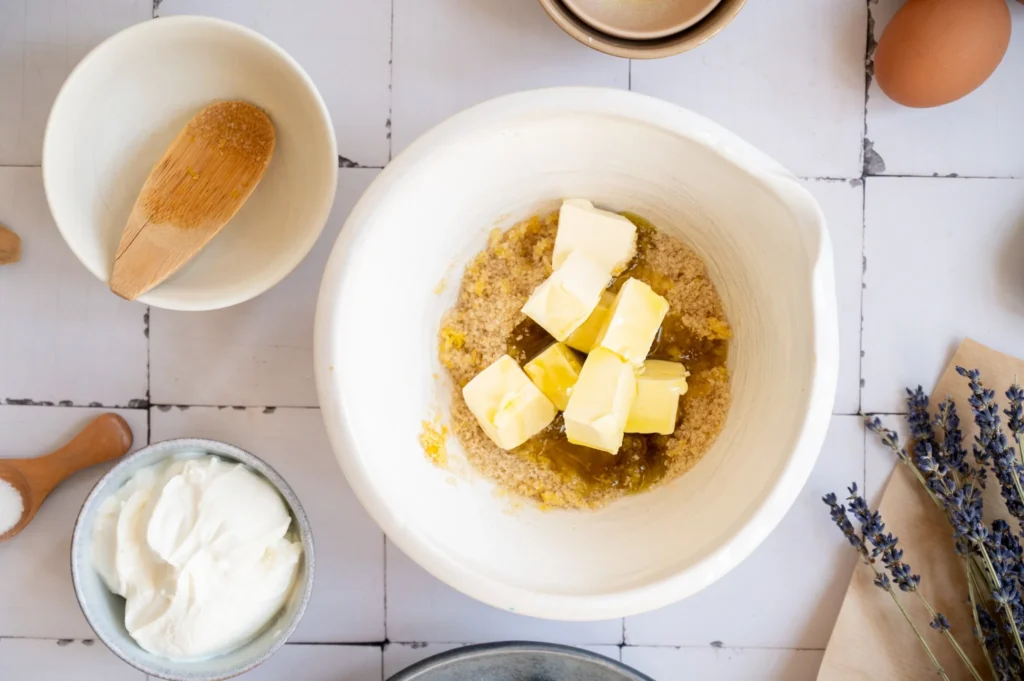
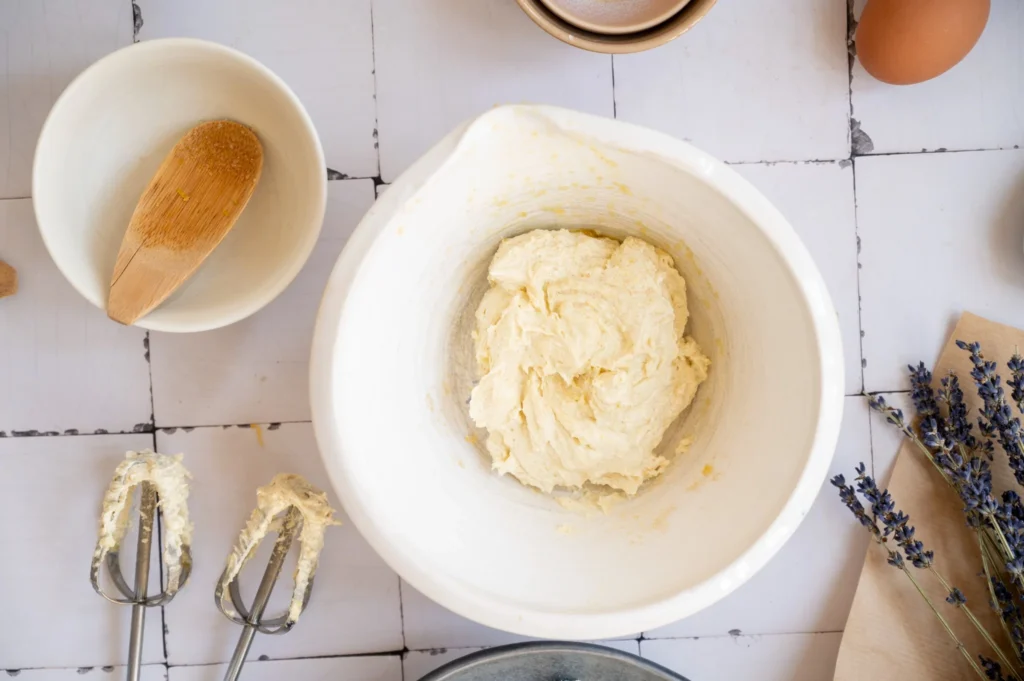
Add the butter and oil.
Add the softened butter and olive oil. Beat with an electric mixer until the mixture is light and creamy, about 2–3 minutes.
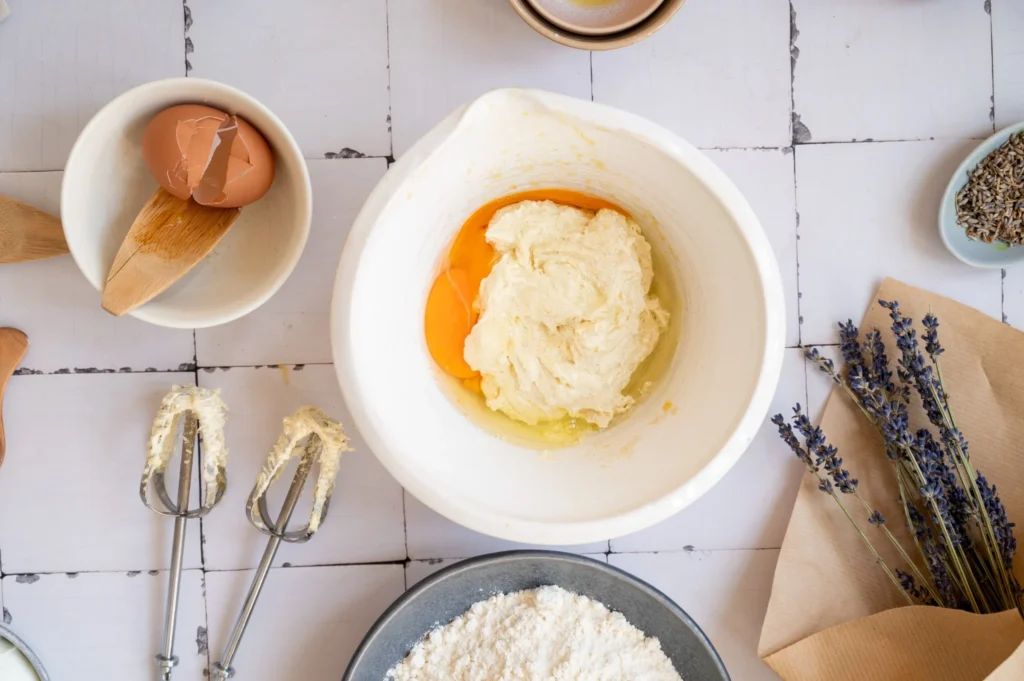
Add the eggs.
Beat in the eggs one at a time, mixing well after each addition and scraping down the sides of the bowl as needed.
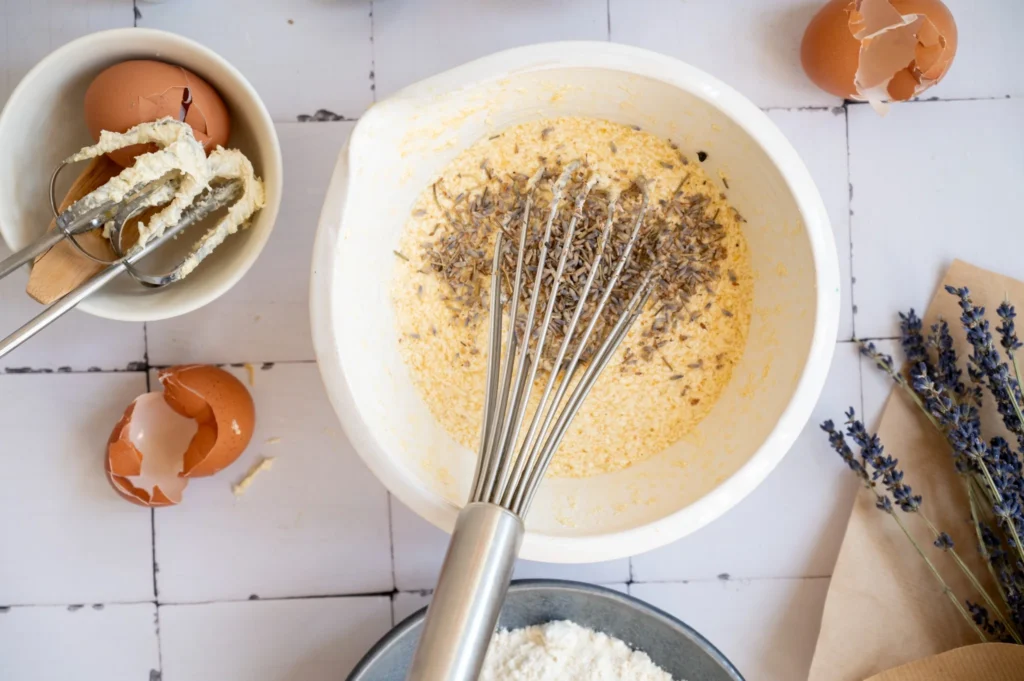
Add the lemon and lavender.
Mix in the fresh lemon juice and finely crushed culinary lavender. The batter may look slightly curdled after adding the lemon juice; this is fine.
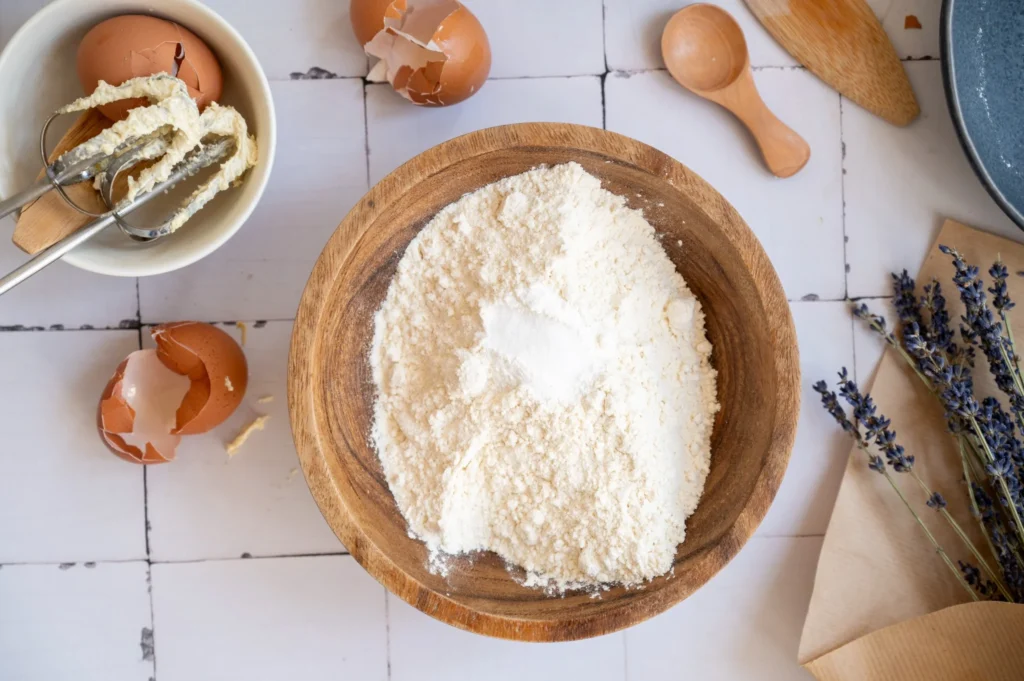
Combine the dry ingredients.
In a separate bowl, whisk together the flour, baking powder, baking soda, and salt.
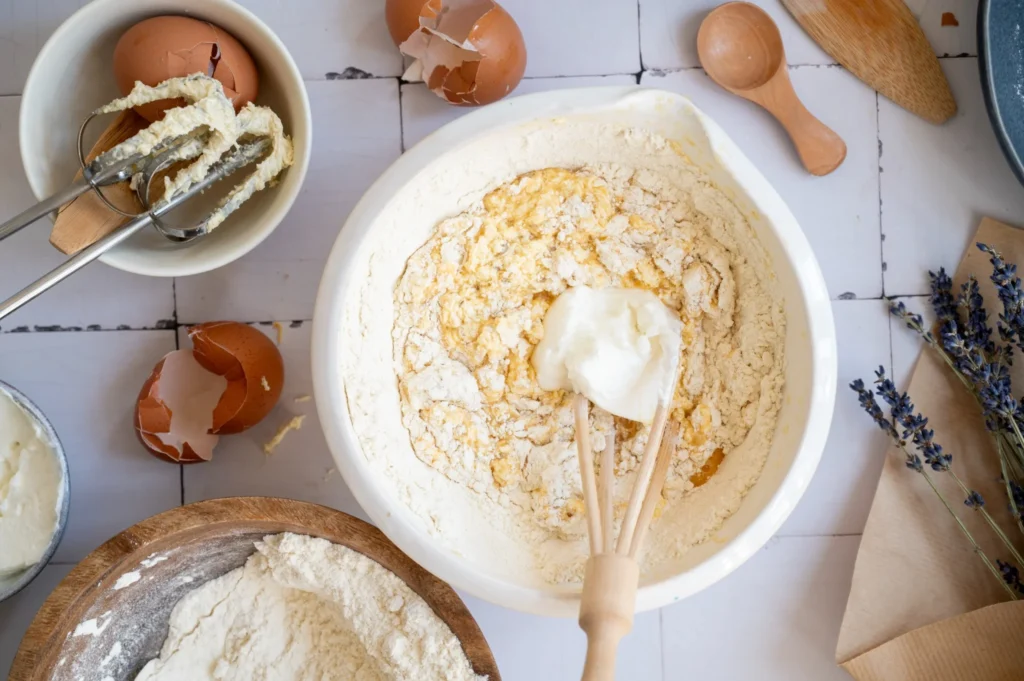
Finish the batter.
Add about one-third of the flour mixture to the wet ingredients and mix on low just until combined. Mix in half of the Greek yogurt. Continue alternating the flour mixture and yogurt, beginning and ending with the flour.
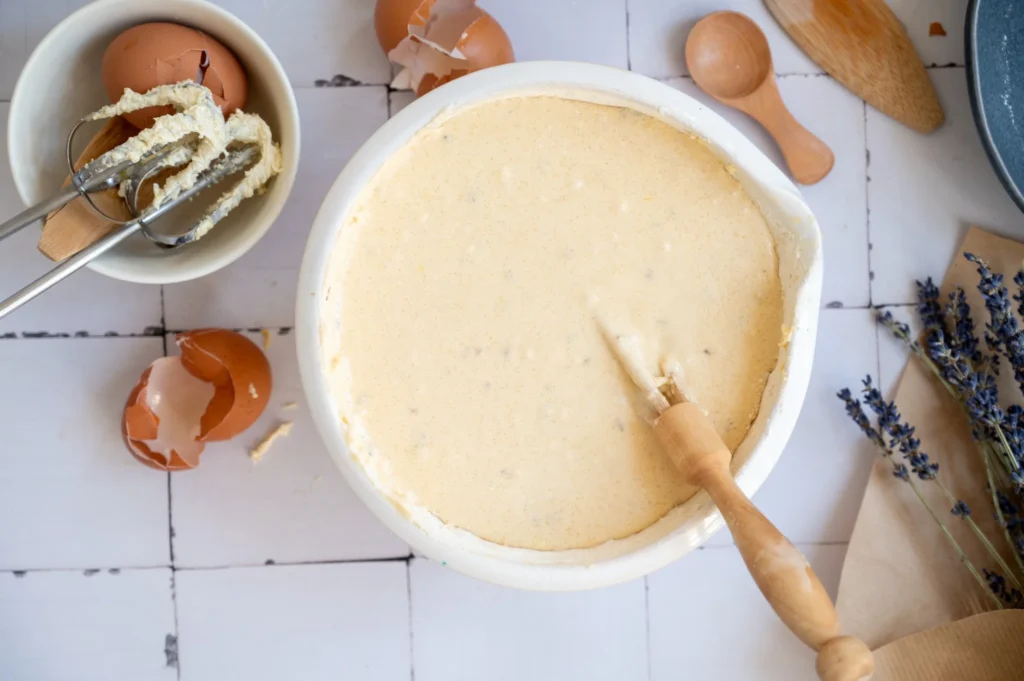
Mix only until no streaks of flour remain. Do not overmix.
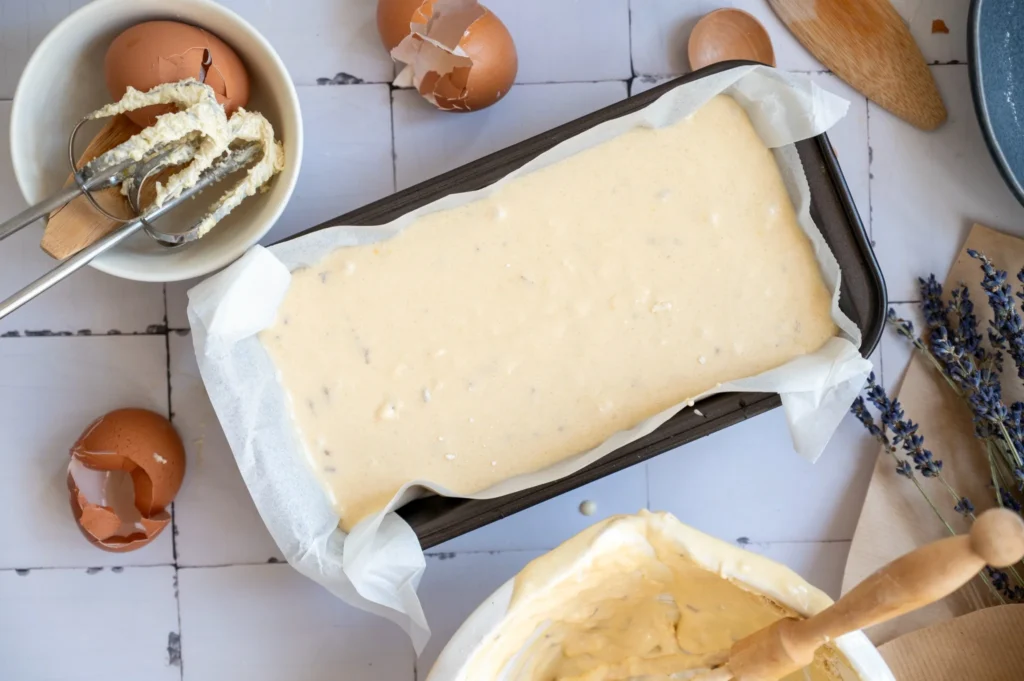
Bake.
Spread the batter evenly in the prepared loaf pan. Bake for 50–60 minutes, or until a toothpick inserted into the center comes out clean or with only a few moist crumbs attached.
If the top begins browning too quickly before the center is finished, loosely tent the loaf with aluminum foil for the remainder of the baking time.
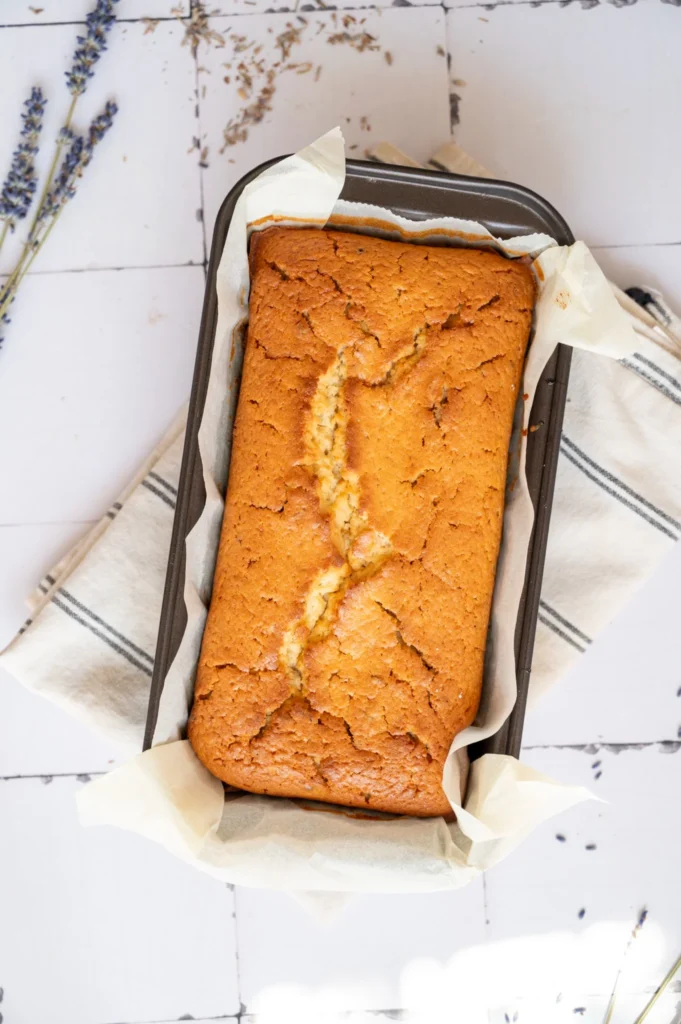
Cool.
Allow the cake to cool in the pan for 10–15 minutes. Use the parchment paper to carefully lift it from the pan and transfer it to a wire rack. Cool completely before adding the glaze.
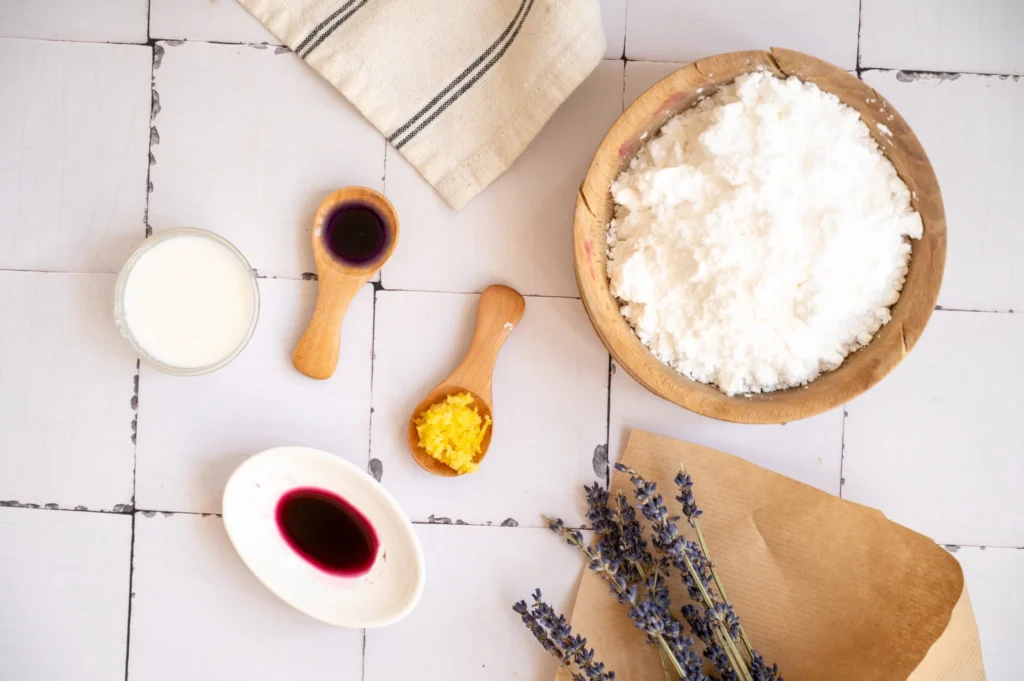
Make the glaze.
Whisk together the powdered sugar, lavender extract, lemon zest, and 2 tablespoons of lemon juice or milk. Add additional liquid, a teaspoon at a time, until the glaze is thick but pourable.
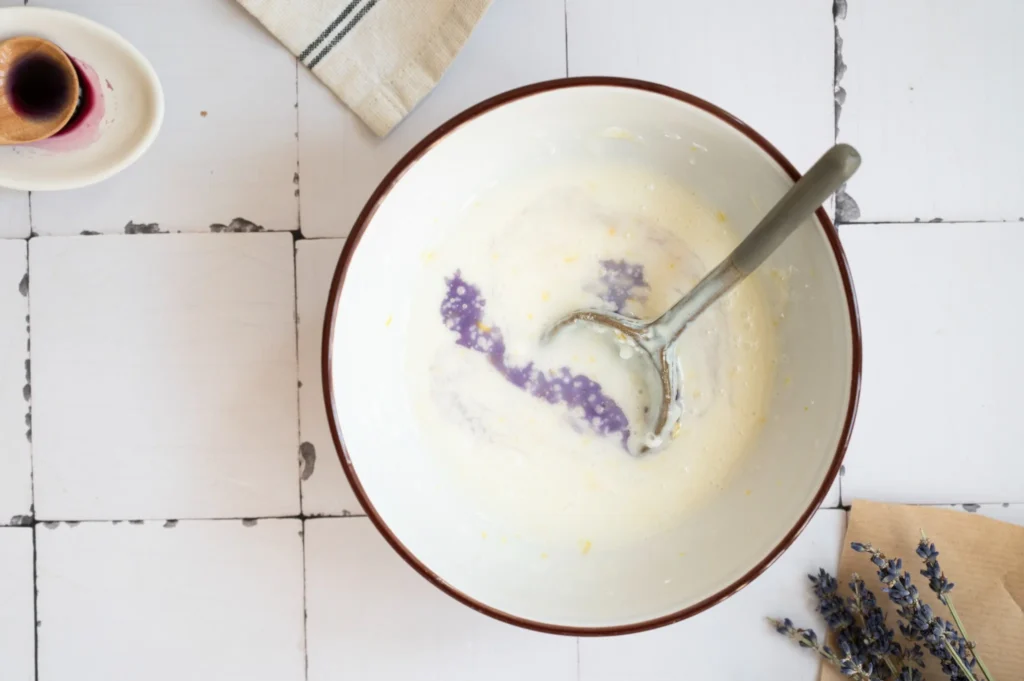
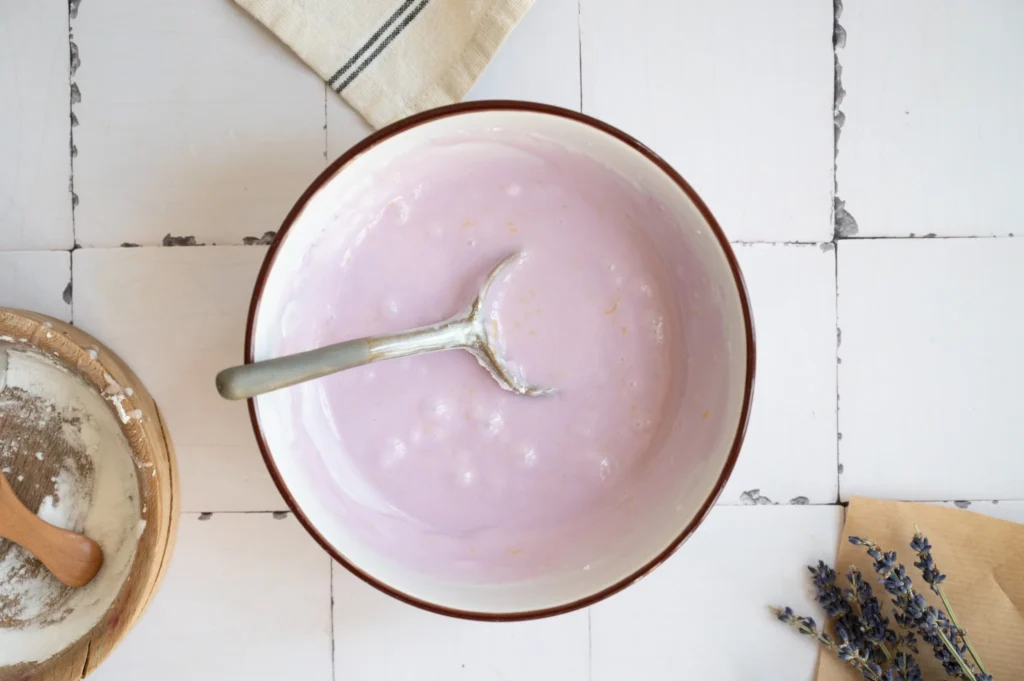
If desired, stir in 1–2 drops of purple food coloring.
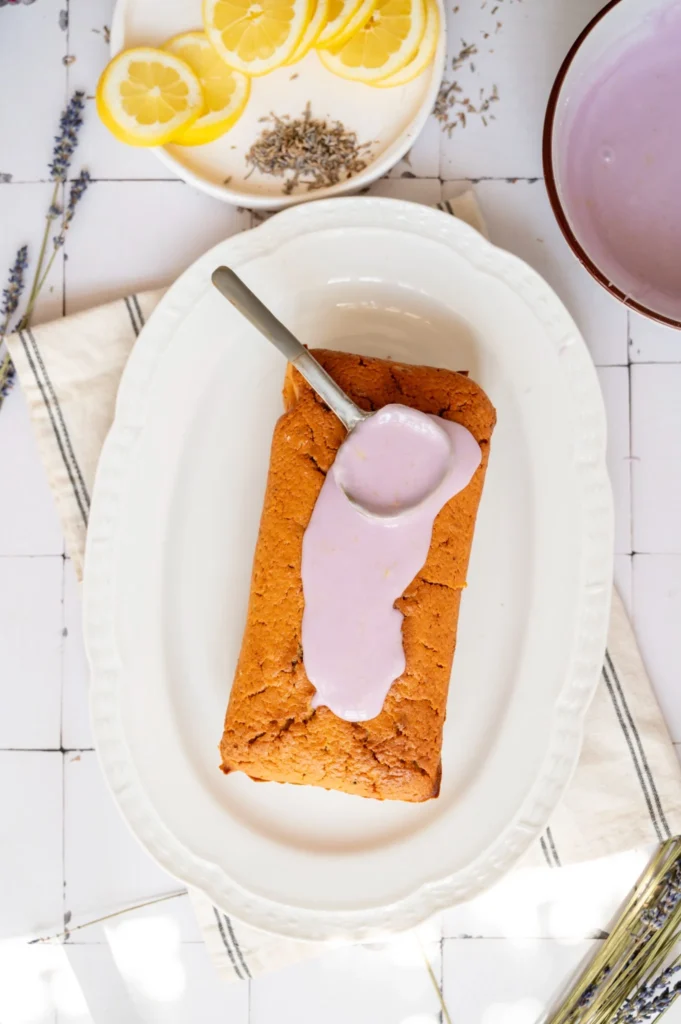
Glaze and serve.
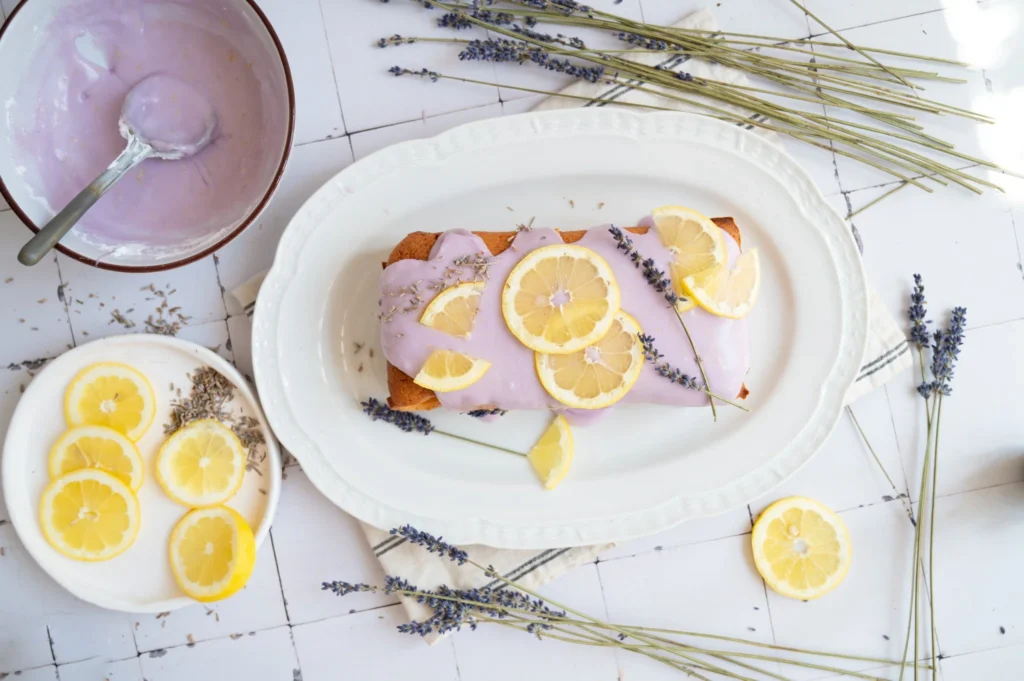
Drizzle the glaze over the completely cooled cake. Garnish sparingly with culinary lavender buds or lemon zest, if desired. Allow the glaze to set before slicing.

A Note About Cooking With Lavender
For this recipe, be sure to use culinary lavender rather than lavender sold for crafts, fragrance, or decorating. Culinary lavender is intended for use in food and has been processed accordingly.
Lavender has a distinctive floral flavor, and a little goes a long way. Lightly crushing the buds before adding them to the batter helps release their aroma and distribute the flavor throughout the cake.
If you have. never baked with lavender before or prefer a more subtle floral flavor, you can reduce the amount slightly.
New to cooking with flowers? The University of Minnesota Extension has a helpful guide to choosing and using edible flowers safely.
Tips for the Best Pound Cake
For the best texture and flavor, keep these simple tips in mind:
- Use room-temperature ingredients. Room-temperature butter, eggs, and Greek yogurt combine more evenly and help create a smoother batter.
- Rub the zest into the sugar. Don’t skip this step. Rubbing them together helps release the oils from the lemon zest for more citrus flavor.
- Measure the flour carefully. Spoon the flour into the measuring cup and level it off rather than scooping directly from the container.
- Don’t overmix. Once you begin adding the flour, mix only until everything is combined.
- Check the cake early. Ovens vary, so begin checking for doneness around the 50-minute mark.
- Cool completely before glazing. Glaze added to a warm cake will melt and run off instead of forming that pretty layer on top.
- Adjust the glaze gradually. Start with 3 tablespoons of liquid and add more only as needed until the glaze reaches a thick but pourable consistency.
Storage
Store leftover Lemon Lavender Pound Cake in an airtight container at room temperature for up to 2 days or in the refrigerator for up to 5 days. Let refrigerated slices come closer to room temperature before serving for the best texture.
You can also freeze the unglazed cake. Wrap it well and freeze for up to 3 months. Thaw overnight, then add the glaze before serving.
Can’t get enough of that bright lemon flavour? Our Lemonade Cookies are another easy citrusy treat that’s especially good for spring and summer.
FAQs
What is culinary lavender?
Culinary lavender is lavender that is specifically grown and processed for use in food. Look for a package clearly labeled culinary or food-grade lavender.
Can I leave out the lavender?
Yes. You can omit the lavender buds and lavender extract for a simple lemon pound cake. You may want to add a little extra lemon zest to emphasize the citrus flavor.
Can I use dried lavender from my garden?
Only use homegrown lavender if you know it has not been treated with pesticides or other products that aren’t intended for edible plants and you have positively identified the variety. When in doubt, use packaged culinary lavender.
Do I have to use purple food coloring?
Not at all. The food coloring is purely decorative and can be left out without affecting the flavor of the glaze.
Should I use milk or lemon juice in the glaze?
Either works. Milk creates a creamier, sweeter glaze, while lemon juice gives the glaze a brighter, more pronounced citrus flavor. You can also use a combination of the two.

Lemon Lavender Pound Cake
Ingredients
For the Cake
- 1 cup granulated sugar 200 g
- 2 tablespoons finely grated lemon zest
- ½ cup unsalted butter softened (115 g)
- ¼ cup extra-virgin olive oil 60 ml
- 3 large eggs room temperature
- 3 tablespoons fresh lemon juice 45 ml
- 2 teaspoons dried culinary lavender buds finely crushed
- 2 cups all-purpose flour 240 g
- 1½ teaspoons baking powder
- ¼ teaspoon baking soda
- ½ teaspoon fine sea salt
- ½ cup plain Greek yogurt room temperature (120 g)
For the Glaze
- 1½ cups powdered sugar sifted (180 g)
- ¼ teaspoon lavender extract
- 1 teaspoon finely grated lemon zest
- 2 –3 tablespoons fresh lemon juice or milk plus more as needed
Optional: 1–2 drops purple food coloring
Optional: culinary lavender buds or thin strips of lemon zest for garnish
Instructions
Preheat and prepare the pan.
- Preheat the oven to 350°F (175°C). Grease a 9 x 5-inch loaf pan and line it with parchment paper, leaving some overhang along the sides to make the cake easier to lift from the pan.
Make the lemon sugar.
- Place the granulated sugar and lemon zest in a large mixing bowl. Rub them together with your fingertips for about 30 seconds, until the sugar is fragrant and slightly damp from the oils in the zest.
Add the butter and oil.
- Add the softened butter and olive oil. Beat with an electric mixer until the mixture is light and creamy, about 2–3 minutes.
Add the eggs.
- Beat in the eggs one at a time, mixing well after each addition and scraping down the sides of the bowl as needed.
Add the lemon and lavender.
- Mix in the fresh lemon juice and finely crushed culinary lavender. The batter may look slightly curdled after adding the lemon juice; this is fine.
Combine the dry ingredients.
- In a separate bowl, whisk together the flour, baking powder, baking soda, and salt.
Finish the batter.
- Add about one-third of the flour mixture to the wet ingredients and mix on low just until combined. Mix in half of the Greek yogurt. Continue alternating the flour mixture and yogurt, beginning and ending with the flour. Mix only until no streaks of flour remain. Do not overmix.
Bake.
- Spread the batter evenly in the prepared loaf pan. Bake for 50–60 minutes, or until a toothpick inserted into the center comes out clean or with only a few moist crumbs attached.
- If the top begins browning too quickly before the center is finished, loosely tent the loaf with aluminum foil for the remainder of the baking time.
Cool.
- Allow the cake to cool in the pan for 10–15 minutes. Use the parchment paper to carefully lift it from the pan and transfer it to a wire rack. Cool completely before adding the glaze.
Make the glaze.
- Whisk together the powdered sugar, lavender extract, lemon zest, and 2 tablespoons of lemon juice or milk. Add additional liquid, a teaspoon at a time, until the glaze is thick but pourable.
- If desired, stir in 1–2 drops of purple food coloring.
Glaze and serve.
- Drizzle the glaze over the completely cooled cake. Garnish sparingly with culinary lavender buds or lemon zest, if desired. Allow the glaze to set before slicing.
Notes
- Use room-temperature ingredients. Room-temperature butter, eggs, and Greek yogurt combine more evenly and help create a smoother batter.
- Rub the zest into the sugar. Don’t skip this step. Rubbing them together helps release the oils from the lemon zest for more citrus flavor.
- Measure the flour carefully. Spoon the flour into the measuring cup and level it off rather than scooping directly from the container.
- Don’t overmix. Once you begin adding the flour, mix only until everything is combined.
- Check the cake early. Ovens vary, so begin checking for doneness around the 50-minute mark.
- Cool completely before glazing. Glaze added to a warm cake will melt and run off instead of forming that pretty layer on top.
- Adjust the glaze gradually. Start with 3 tablespoons of liquid and add more only as needed until the glaze reaches a thick but pourable consistency.
Nutrition